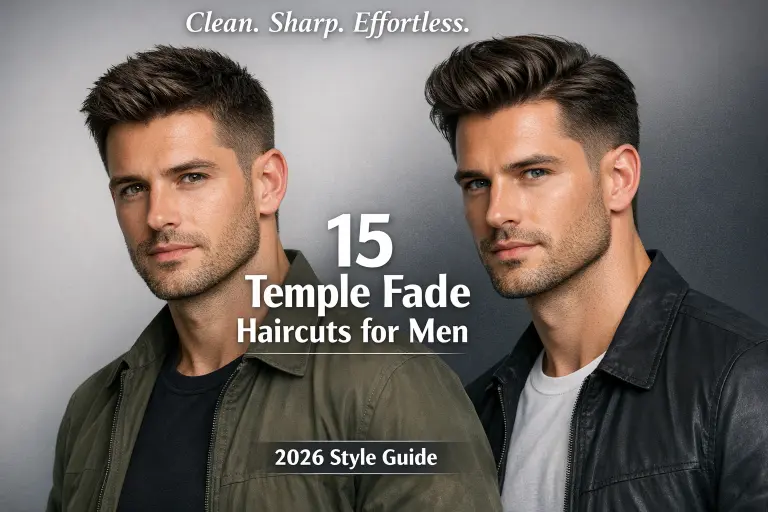
15 Temple Fade Haircuts for Men to Try in 2026
Struggling to find a haircut that looks sharp without feeling overdone? A lot of men want something clean around the edges but still versatile on top—and that’s exactly where the Temple Fade Haircuts for Men comes in. It’s subtle, modern, and works across different styles without locking you into one look.
What Is a Temple Fade Haircut?
A temple fade haircut is a type of fade where the hair gradually tapers down around the temples and sideburn area instead of the entire sides. It creates a clean, blended transition while keeping more length above the ears, making it a versatile option for both casual and professional styles.
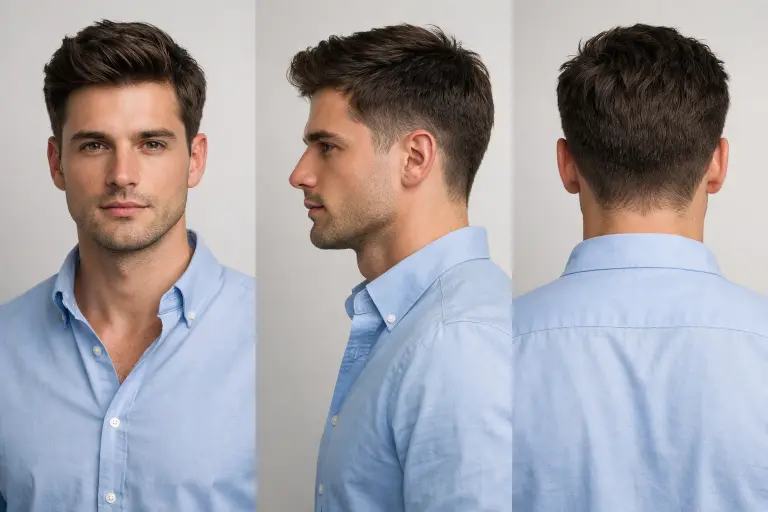
1. Classic Temple Fade
This is the most balanced and wearable version. The fade starts lightly around the temples and blends into a slightly longer top, usually scissor-cut rather than aggressively clipped. It suits almost every face shape and works best on straight to wavy hair. The look is clean without being sharp, making it ideal for office settings. Maintenance is moderate—just a trim every 2–3 weeks.
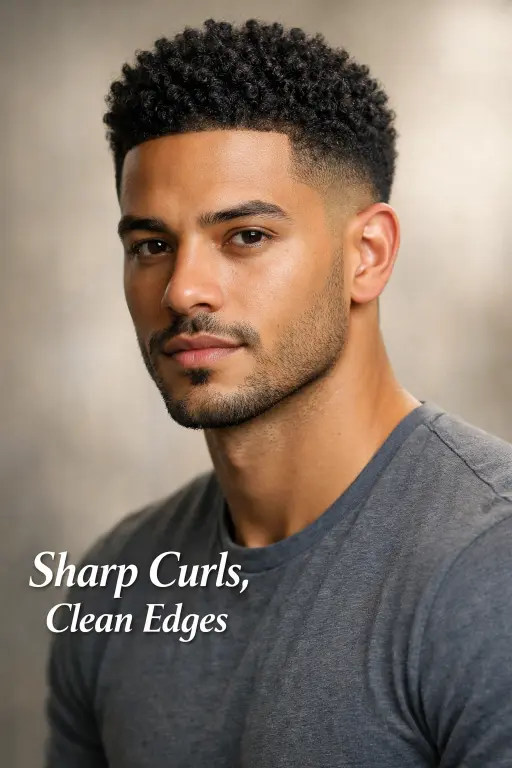
2. Temple Fade with Short Curls
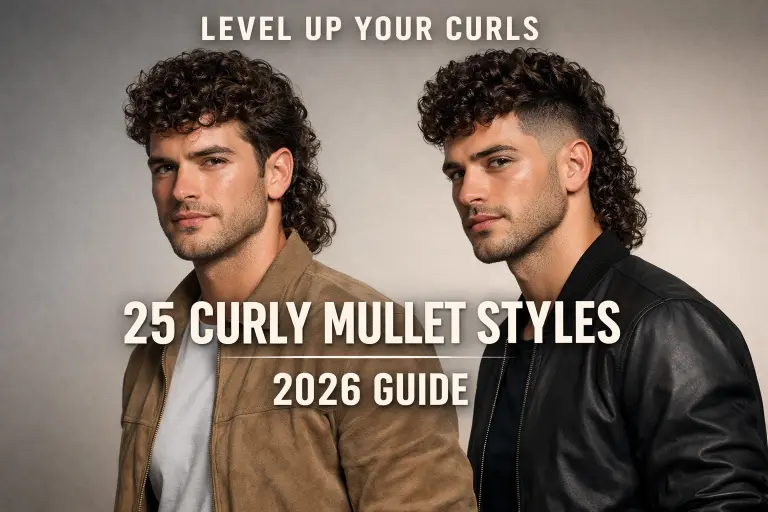
Here, the natural curls are kept tight and defined on top, while the temple area is faded clean. The contrast makes the curls stand out without looking messy. Best for men with naturally curly or coily hair, especially those with oval or square faces. It gives a fresh, youthful vibe and requires curl cream or sponge styling for definition.
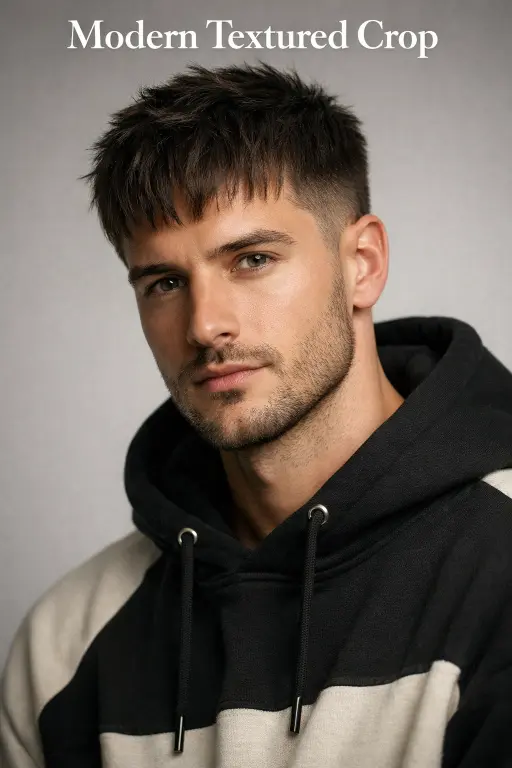
3. Temple Fade with Textured Crop
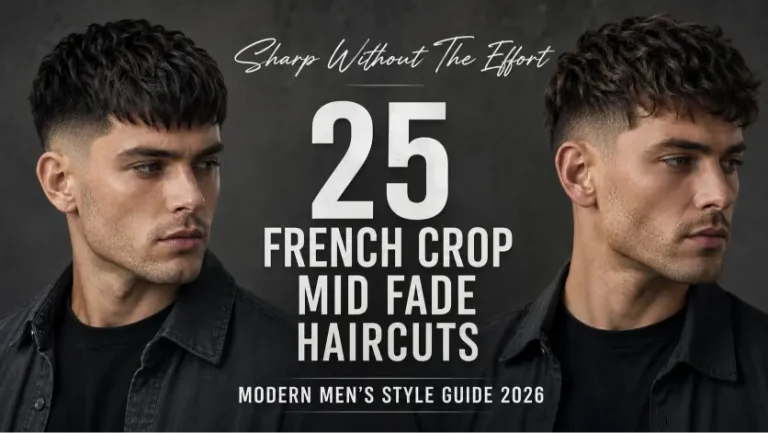
This style features a short, choppy top with uneven texture and a soft temple fade. The fringe is usually slightly forward. It works well for thick or straight hair and is great for men who want something modern but low-effort. Ideal for round or oval faces, as the texture adds dimension. Minimal styling—just a matte product.
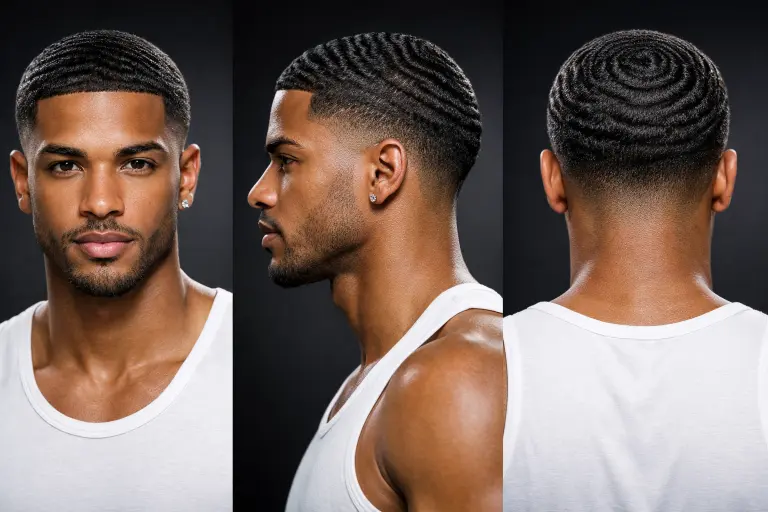
4. Temple Fade with Waves (360 Waves)
A popular choice for men with coarse or tightly coiled hair, this style combines a low temple fade with well-maintained waves across the scalp. The fade enhances the wave pattern by keeping the edges clean. It suits most face shapes and requires consistent brushing, durag use, and wave pomade.
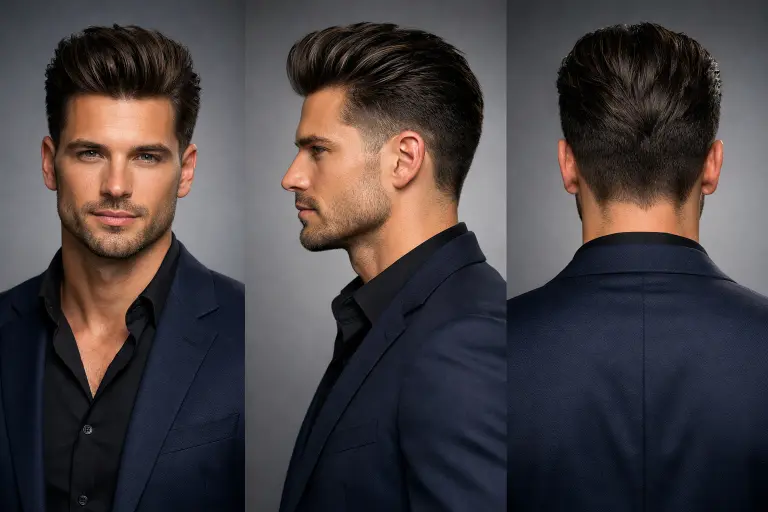
5. Temple Fade with Pompadour
The top is styled high and swept back, while the temple fade keeps the sides neat without going too short. This works best on medium to thick straight hair. It elongates round faces and adds structure to softer features. Styling requires a blow dryer and pomade, so expect daily effort.
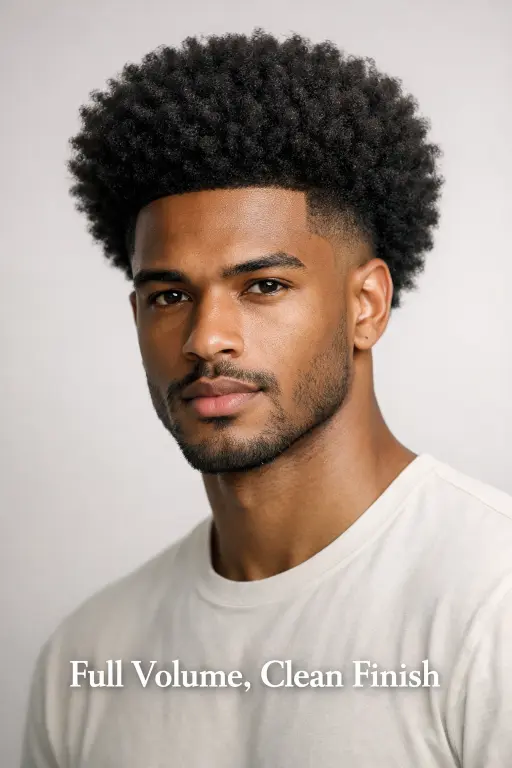
6. Temple Fade with Afro
This keeps the afro full and rounded on top, with a crisp fade at the temples and edges. It creates a sharp outline without reducing volume. Ideal for men with dense, coily hair and suits oval or square faces best. Maintenance involves regular shaping and moisturizing to keep the afro healthy.
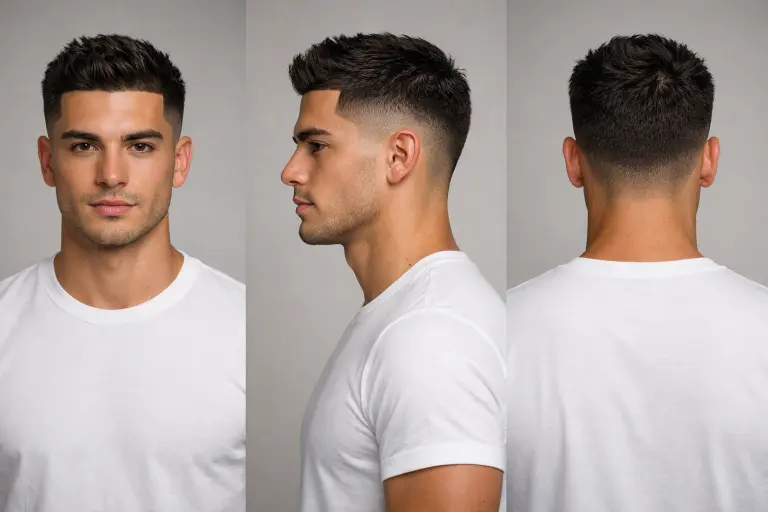
7. Temple Fade with Line-Up
A sharp line-up (edge-up) defines the hairline, paired with a subtle temple fade. The focus here is precision—clean lines at the forehead and temples. Works well on most hair types, especially short to medium lengths. It gives a very polished, barbershop-fresh look but requires frequent touch-ups.
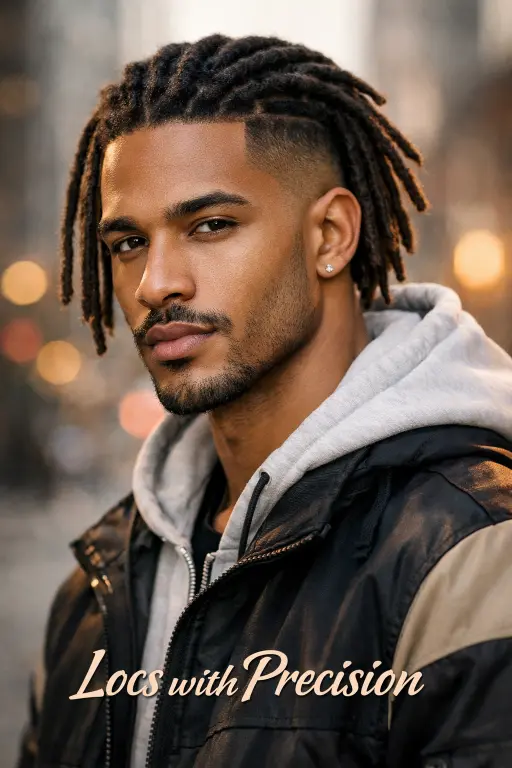
8. Temple Fade with Dreadlocks
The dreads are kept medium to long on top while the temples are faded clean for contrast. This style balances structure with individuality. Best for men with established locs and suits longer face shapes. Maintenance depends on your loc routine, but the fade needs regular cleanup to stay sharp.
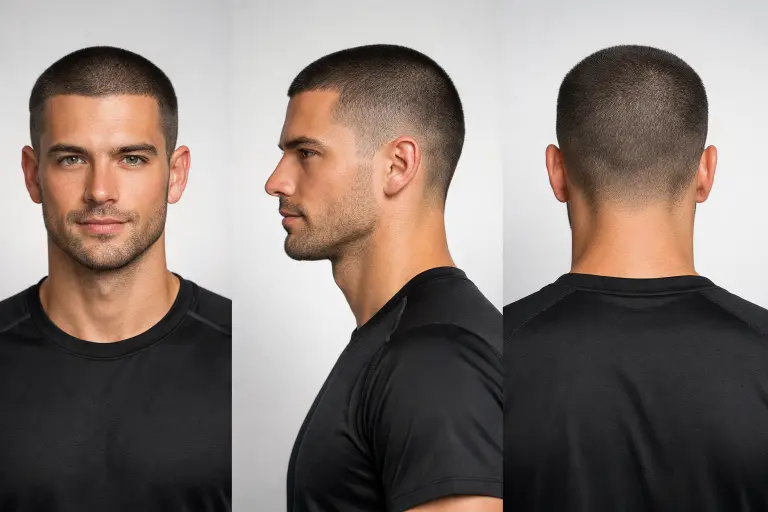
9. Temple Fade with Buzz Cut
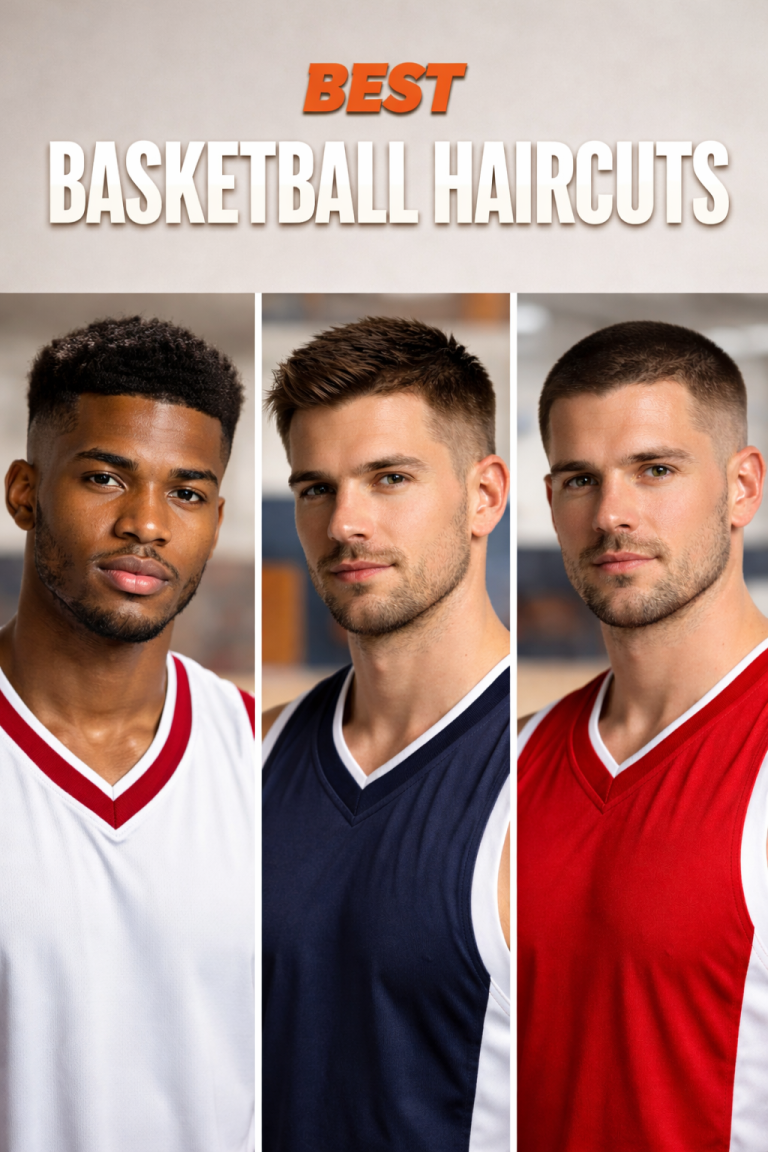
A simple buzz cut combined with a temple fade adds just enough detail to an otherwise basic haircut. The fade breaks the uniformity and adds shape. Great for men who want ultra-low maintenance and works with all hair types. Perfect for athletic or no-fuss lifestyles.
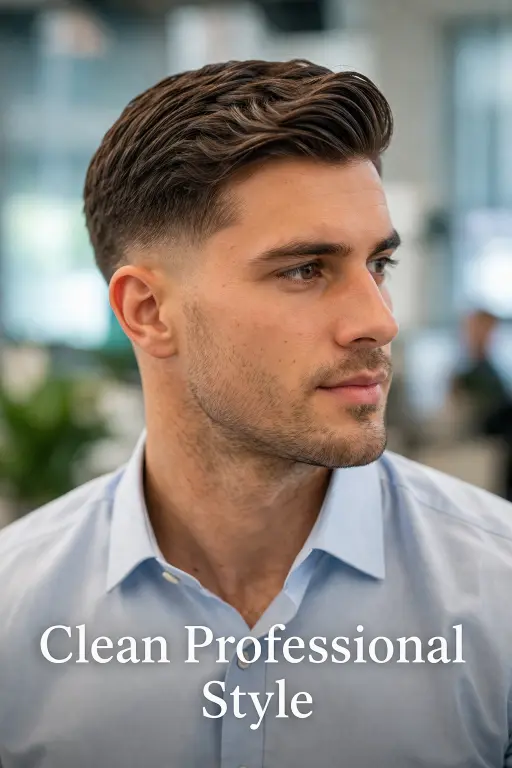
10. Temple Fade with Side Part
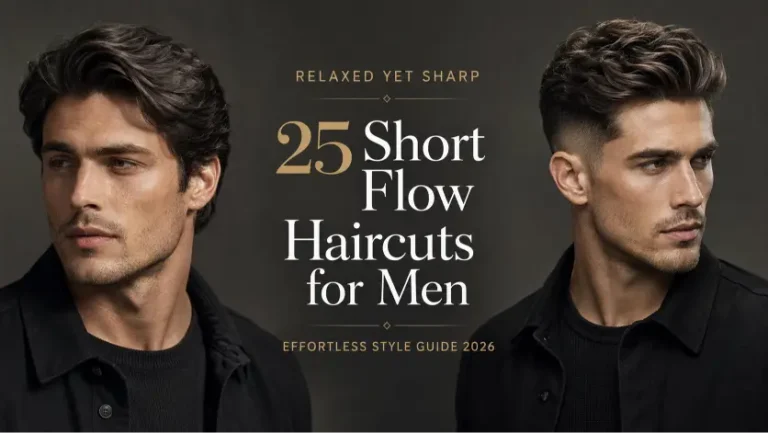
This style keeps the top longer and parted neatly to one side, while the temple fade adds a modern edge. Ideal for straight or slightly wavy hair and suits oval, square, and heart-shaped faces. It gives a clean, professional look and requires light styling with a comb and product.
11. Temple Fade with Faux Hawk
The top is styled upward and slightly toward the center, creating a subtle mohawk shape, while the temple fade keeps the sides tight. Works best for thick hair and suits round faces by adding height. It gives a bold, energetic vibe and needs moderate styling effort.
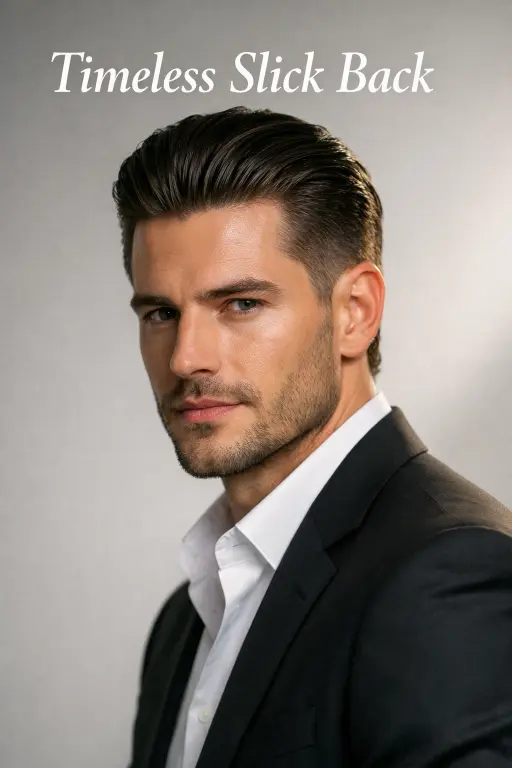
12. Temple Fade with Slick Back
Hair is combed straight back with a smooth finish, while the temples are faded for a clean frame. Best for medium-length straight or wavy hair. It suits oval and square faces and gives a mature, controlled appearance. Requires pomade or gel and regular styling.
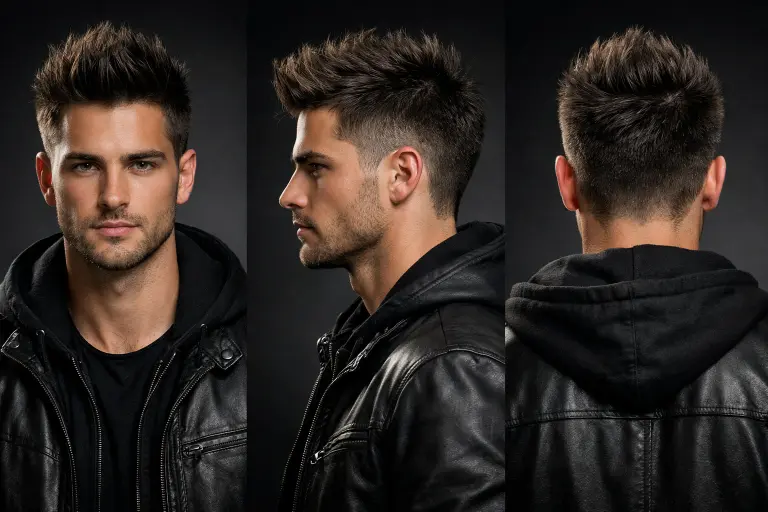
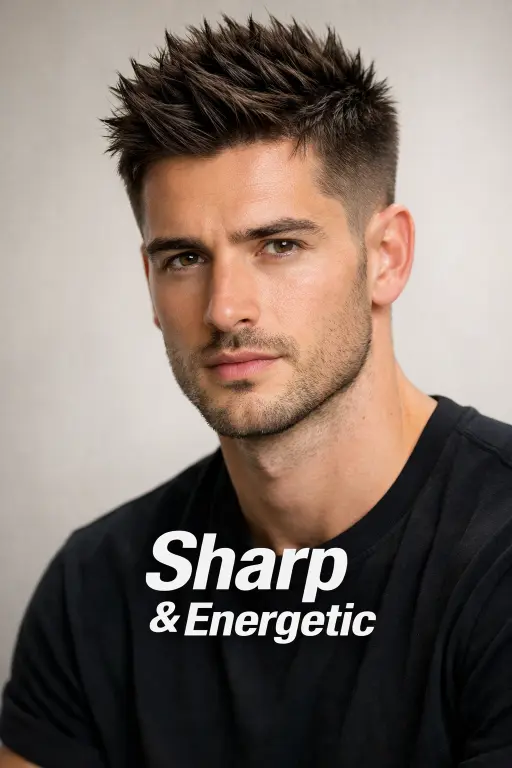
13. Temple Fade with Spiky Hair
Short to medium hair on top is styled into spikes, with a clean fade around the temples. This works best for thick, straight hair and suits younger guys or those wanting a more casual, edgy look. Requires a strong hold product but is quick to style.
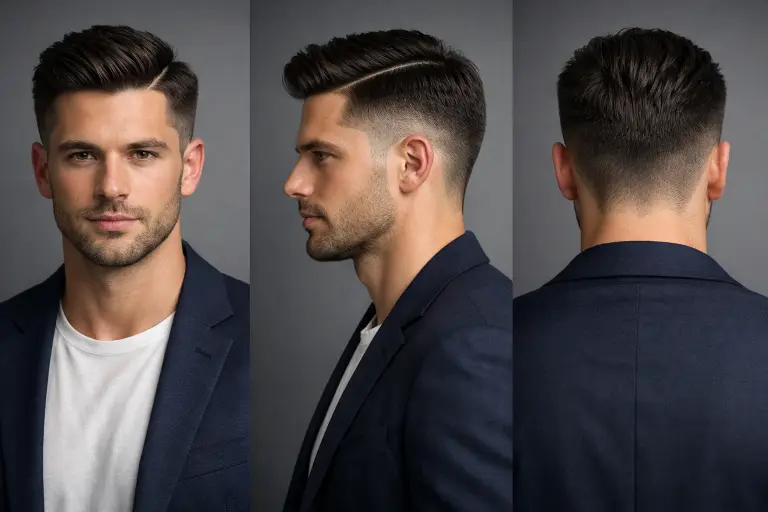
14. Temple Fade with Hard Part
A shaved line (hard part) separates the top from the side, while the temple fade keeps the area clean. This adds definition and structure to the haircut. Best for straight or slightly wavy hair and suits square or oval faces. It’s a sharp, intentional look but needs frequent barber visits to keep the part visible.
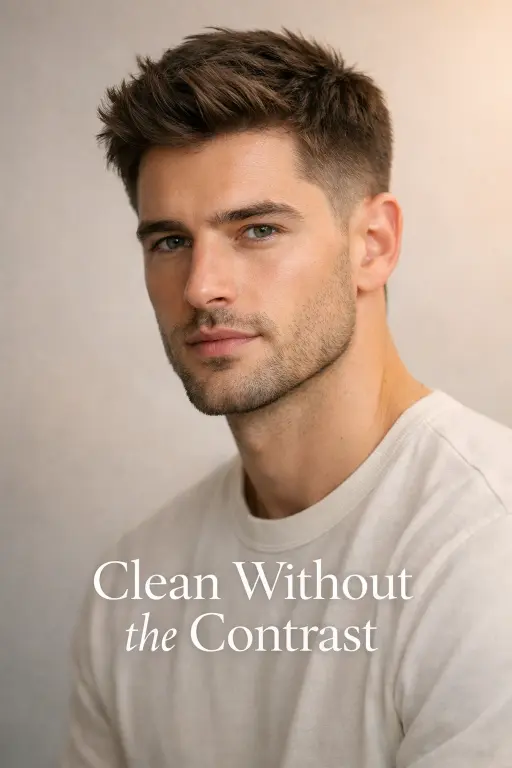
15. Temple Fade with Tapered Neckline
Instead of a full fade at the back, the neckline is softly tapered while the temples are faded. This creates a more natural, less aggressive finish. Great for men who want a clean look without high contrast. Works on all hair types and is easy to maintain.
How to Choose the Right Temple Fade Hairstyle
Choosing the right temple fade depends on a few key factors. Face shape matters—round faces benefit from styles with height like pompadours or faux hawks, while square faces can handle sharper, structured looks like side parts or line-ups. Hair type and texture play a big role—curly or coily hair works best with styles that embrace natural texture, while straight hair suits slick backs or crops. Hair density also affects the result—thicker hair supports volume-heavy styles, while thinner hair looks cleaner with shorter cuts. Finally, consider your lifestyle—if you want low effort, go for crops or buzz cuts; if you enjoy styling, options like pompadours are better.
Common Mistakes to Avoid
Many men ask for a temple fade without specifying how low or sharp they want it, which leads to inconsistent results. Choosing a style that fights your natural hair texture is another common issue. Ignoring maintenance is also a mistake—some styles need weekly clean-ups. Overusing heavy products can flatten the look, and not thinking about how the haircut grows out can leave it looking uneven after a couple of weeks.
Pro Tips
Always bring a reference photo since temple fades can vary a lot in execution. Keep your edges maintained between barber visits for a consistently clean look. Use lightweight products for natural styles and stronger hold products for structured styles. If you’re going for waves or texture, invest in a good brush. Most importantly, schedule trims every 2–3 weeks to keep the fade looking sharp.
Conclusion
A temple fade is one of the most adaptable haircuts you can choose—it’s clean, subtle, and works with almost any style on top. The key is picking a version that matches your hair type and how much time you’re willing to spend styling. Choose smart, and it’ll carry your look confidently into 2026.
FAQs
1. How long does a temple fade last? Typically 2–3 weeks before it starts losing its sharpness and needs a touch-up.
2. Is a temple fade suitable for all hair types? Yes, it works with straight, wavy, curly, and coily hair—the top style just needs to match your texture.
3. What’s the difference between a temple fade and a taper? A temple fade focuses on the temples and blends quickly, while a taper is more gradual and extends through the sides and back.
4. Can I get a temple fade with long hair? Yes, the fade only affects the temple area, so the top can be long, including styles like slick backs or dreadlocks.
5. How do I maintain a temple fade at home? Keep the edges clean with a trimmer, use the right styling products, and visit your barber regularly for proper blending.