15 Low Taper Fade with Textured Fringe Ideas for Men
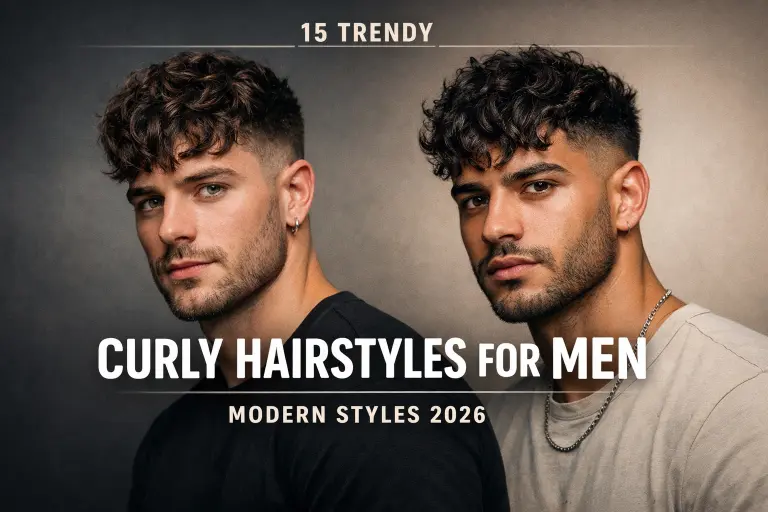
Struggling to find a haircut that looks modern without needing constant styling? A lot of guys want something clean on the sides but relaxed and natural on top—and that’s exactly where the low taper fade with textured fringe comes in. It’s sharp without being too harsh, and stylish without feeling overdone. Let’s break down the best variations so you can find one that actually fits your hair, face shape, and daily routine.
What Is a Low Taper Fade with Textured Fringe?
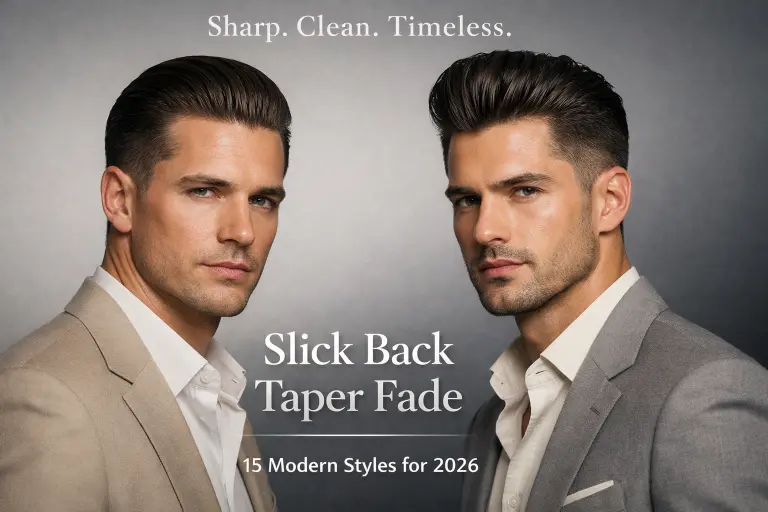
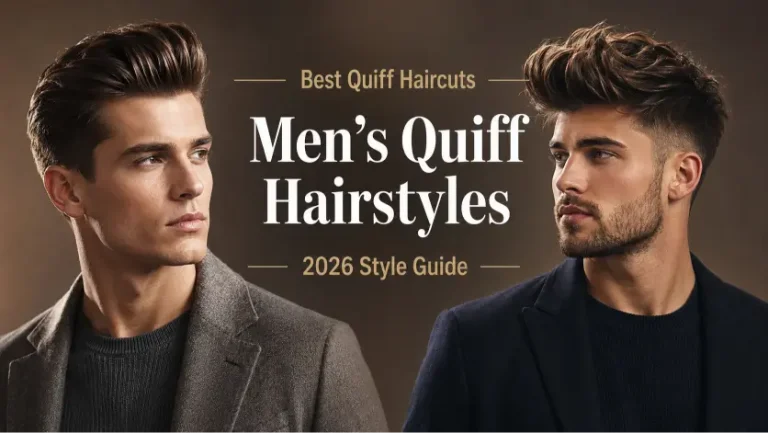
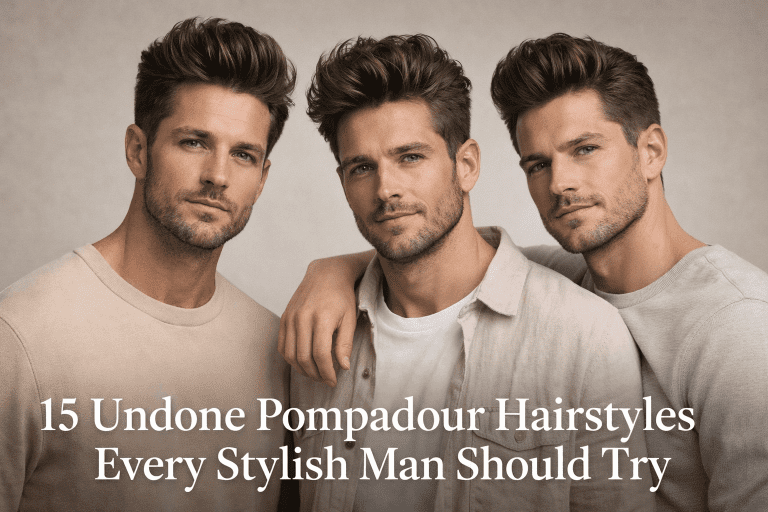
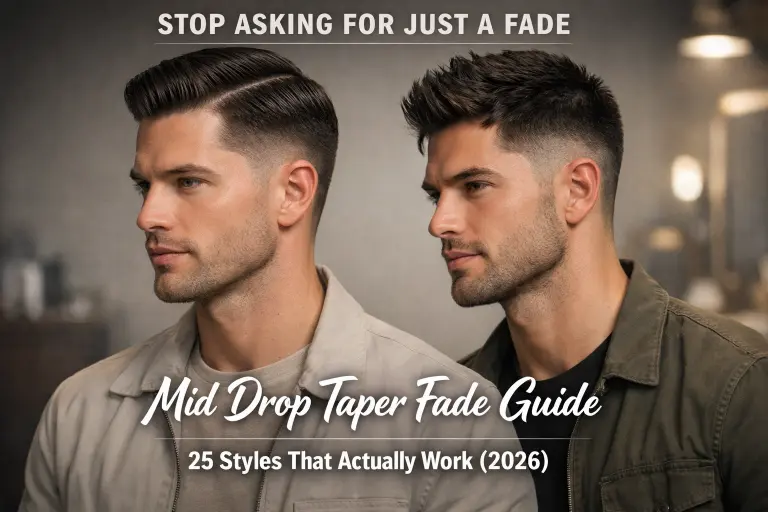
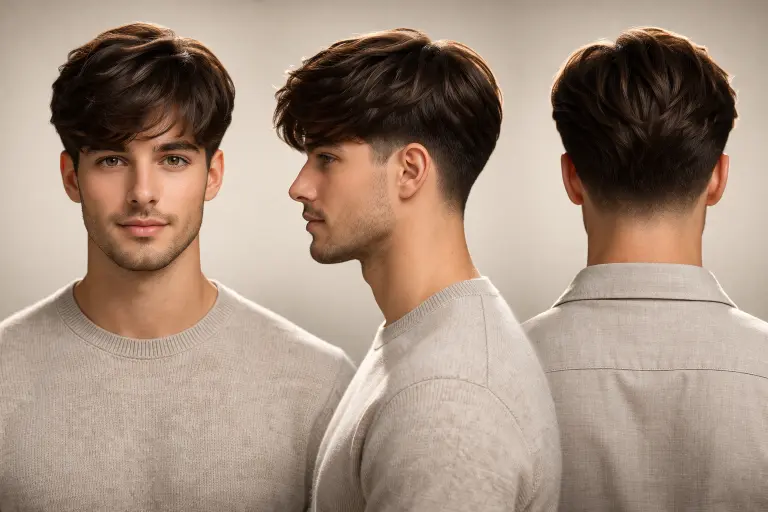
A low taper fade with textured fringe keeps the sides and neckline gradually faded starting low near the ears, while the top is left longer with choppy, layered texture that falls forward as a fringe. It creates a clean yet relaxed look that balances sharp edges with natural movement.
1. Classic Low Taper with Soft Textured Fringe
This is the most balanced and wearable version of the style. The taper starts just above the ears and blends smoothly into a medium-length top. The fringe is lightly layered—not too choppy—so it falls naturally across the forehead without looking messy. It suits almost everyone, especially guys with straight to slightly wavy hair. Ideal for oval, square, or heart-shaped faces because it softens the forehead without covering too much. The vibe is clean and approachable, and it requires minimal styling—just a bit of matte cream or light wax. Choose this if you want something low-effort but still polished.
2. Low Taper Fade with Heavy Textured Fringe
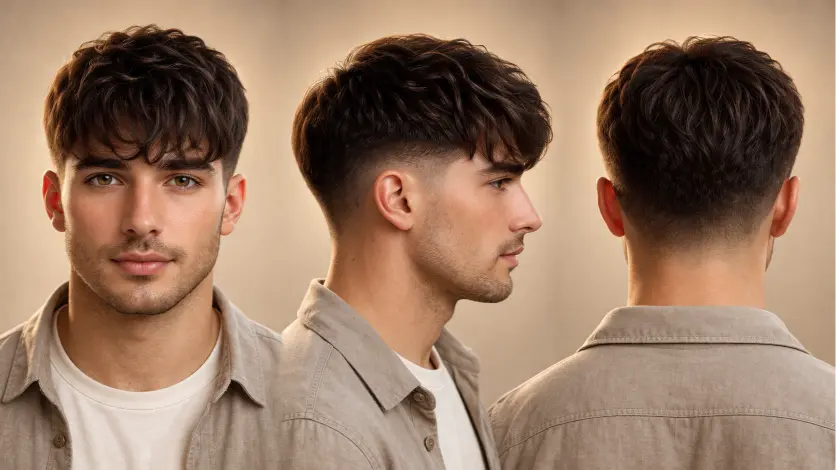
Here, the top is much thicker and more aggressively layered, creating a bold, chunky fringe. The low taper keeps the sides tight, making the top stand out even more. Best for guys with thick or dense hair who want to reduce bulk without going short. Works well on round or wider face shapes because the heavier fringe adds structure. It has a slightly edgy, fashion-forward feel. It needs some styling—usually a matte paste to separate the layers—but the payoff is a more defined look.
3. Messy Textured Fringe with Low Taper
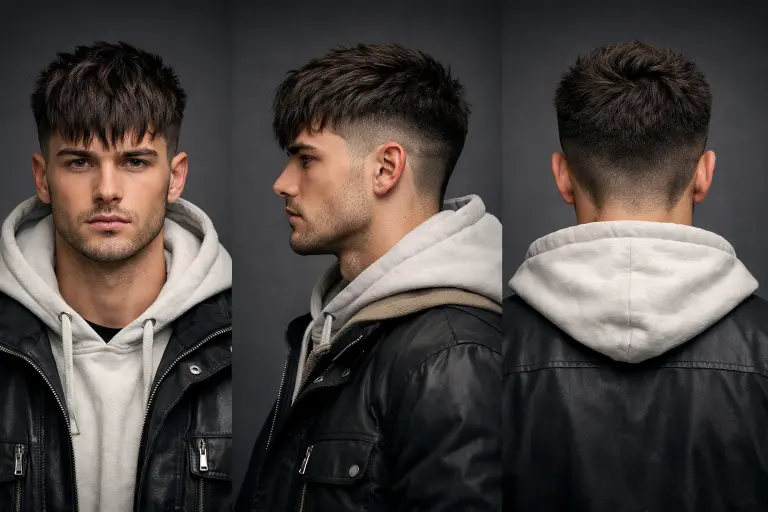
This version leans into a deliberately undone look. The fringe is cut unevenly and styled loosely, often pushed slightly to one side or left to fall naturally. Perfect for wavy or slightly curly hair. It suits casual lifestyles and works great on oval and long face shapes. The overall vibe is relaxed and effortless. Maintenance is low—just scrunch in a bit of styling cream and go. Ideal if you don’t want to spend time in front of the mirror.
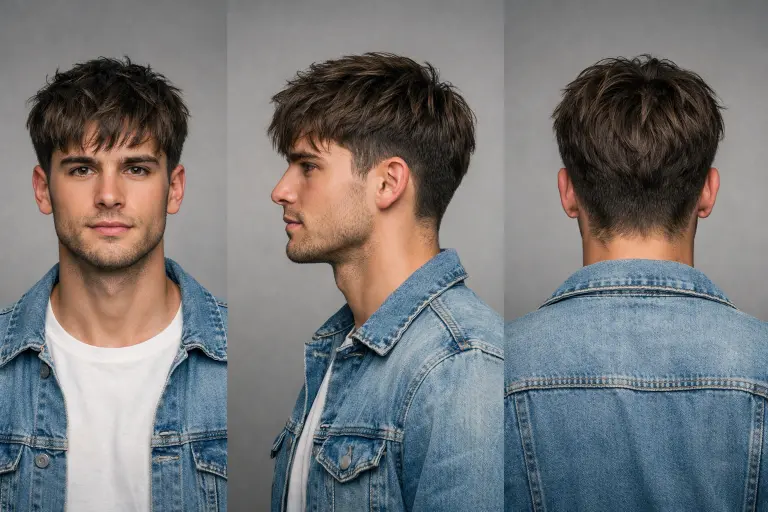
4. Low Taper Fade with Short Textured Fringe
The fringe here is kept shorter, sitting just above or lightly touching the eyebrows. The texture is subtle but still visible. Great for men who want a cleaner, neater appearance while keeping some modern edge. Works well with straight or fine hair and suits square and oval faces. This style is easy to maintain and requires very little product—perfect for professionals or minimalists.
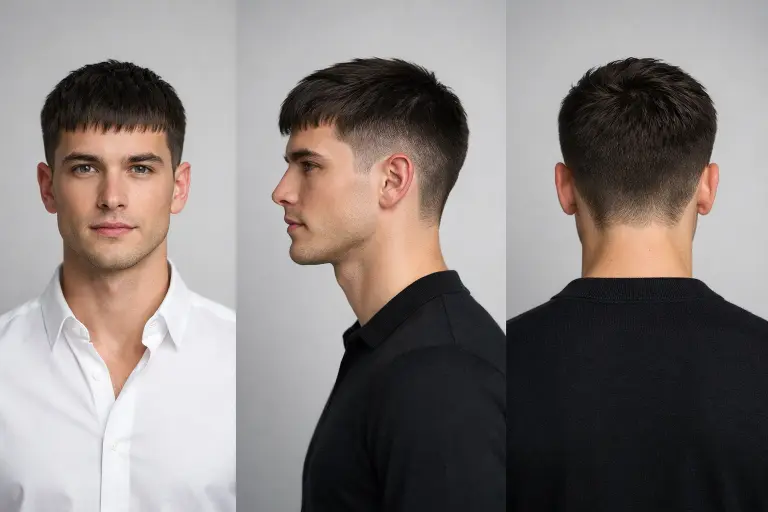
5. Curly Textured Fringe with Low Taper Fade
This style embraces natural curls, letting them form a soft, forward fringe while the low taper keeps the sides controlled. Best for naturally curly or coily hair. It complements longer or angular face shapes by adding width and softness at the front. It gives off a laid-back, confident vibe but requires proper curl care—think leave-in conditioner or curl cream to keep definition and avoid frizz.
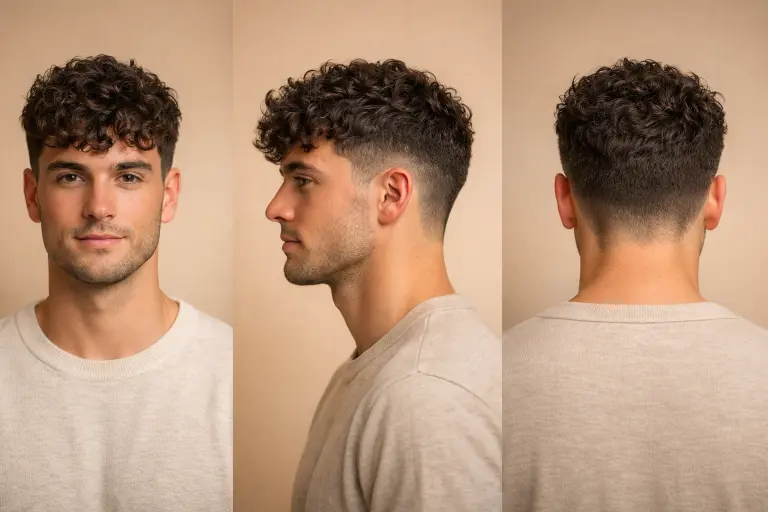
6. Low Taper Fade with Disconnected Textured Fringe
In this variation, there’s a noticeable contrast between the short sides and the longer top, with minimal blending. The fringe is heavily textured and clearly separated from the fade. Ideal for guys who want a bold, statement haircut. Works best with thick hair and suits oval or angular face shapes. Styling is moderate—you’ll need product to define the separation. Choose this if you want something more striking than a traditional blend.
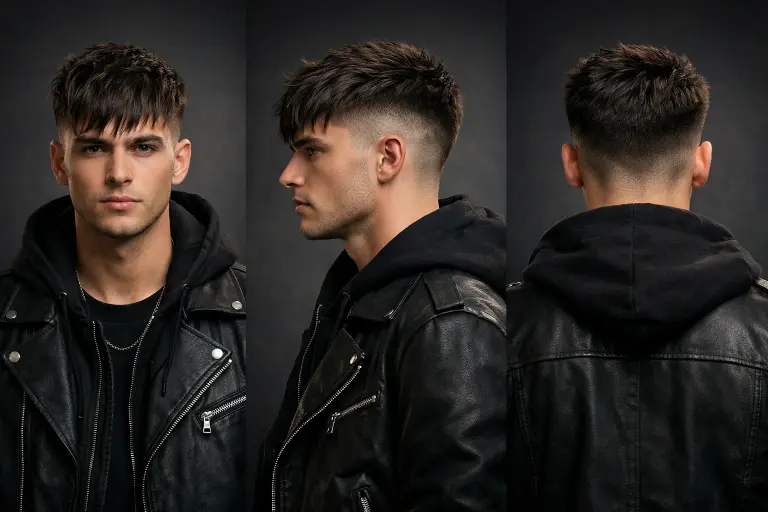
7. Low Taper Fade with Side-Swept Textured Fringe
Instead of falling straight down, the fringe is directed diagonally across the forehead. The texture adds movement and prevents it from looking flat. Great for straight or wavy hair. It suits round faces particularly well because it creates angles and breaks up symmetry. The look is slightly refined but still casual. A light styling cream or blow-dry helps guide the direction.
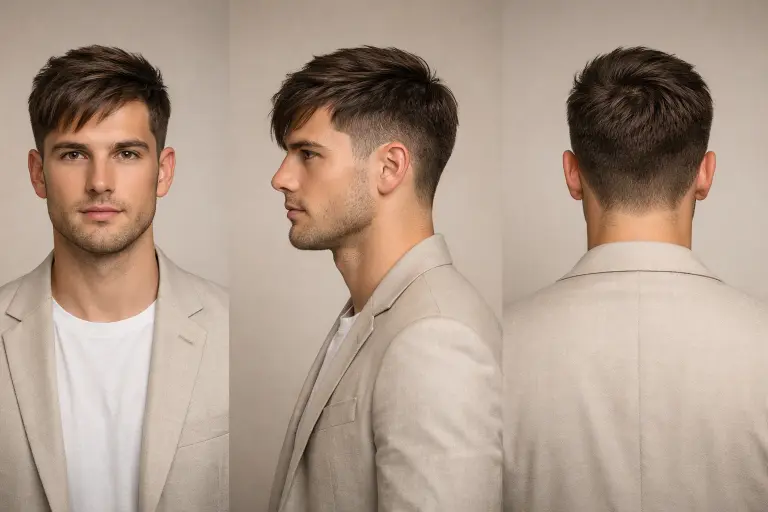
8. Low Taper Fade with Choppy Fringe
This version focuses on uneven, jagged layers that create a rugged, piecey fringe. Best for medium to thick hair. It works well on square and oval face shapes and gives off a more youthful, edgy feel. It requires some styling—usually a matte paste to highlight the separation. Choose this if you want texture that’s clearly visible.
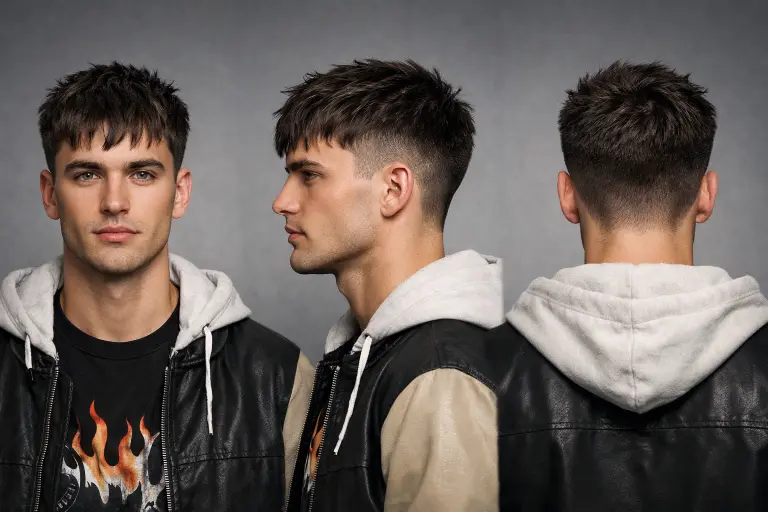
9. Low Taper Fade with Long Textured Fringe
Here, the fringe is left noticeably longer, sometimes covering part of the eyes. The texture keeps it from looking heavy or flat. Ideal for thicker hair and longer face shapes. It adds drama and draws attention to the front. This style needs more maintenance—you’ll likely need to style it daily and trim regularly to keep it from becoming unruly.
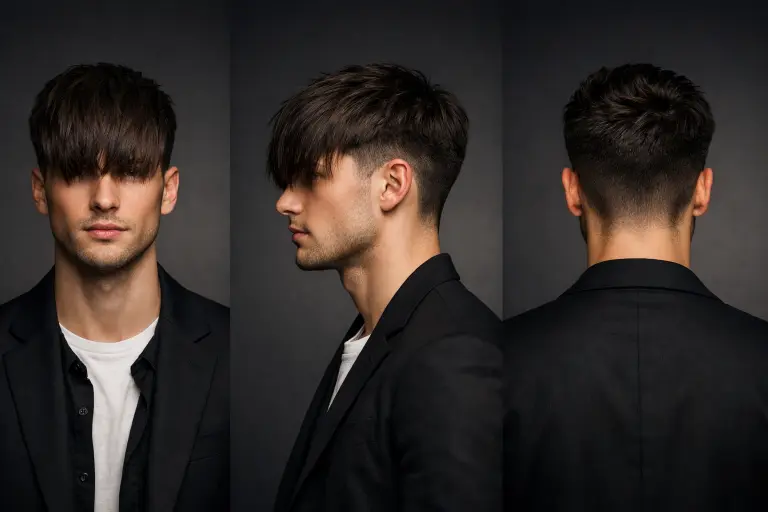
10. Low Taper Fade with Subtle Textured Fringe
This is a toned-down version where the texture is minimal and the fringe blends smoothly into the rest of the hair. Perfect for fine or thinning hair, as it avoids making the hair look sparse. It suits all face shapes but especially works well for professional environments. Low maintenance and easy to style—just a small amount of product for control.
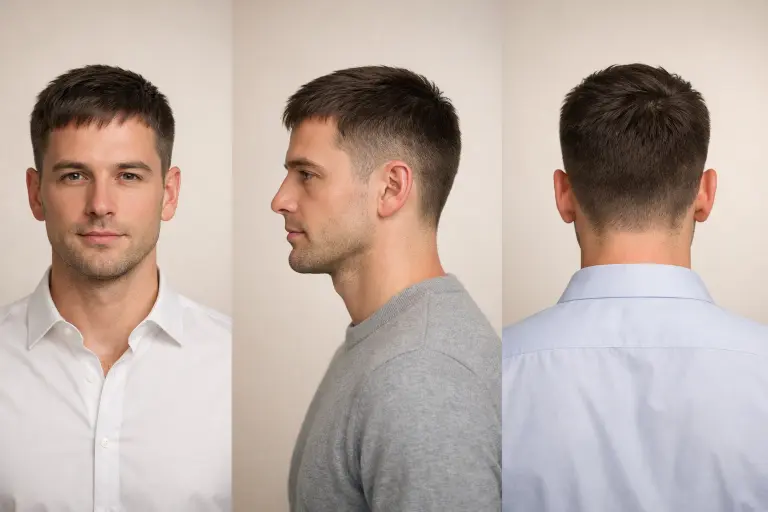
11. Low Taper Fade with Wavy Textured Fringe
Designed specifically for natural waves, this style enhances the wave pattern in the fringe while keeping the sides neat. Best for medium-density wavy hair. It suits oval and heart-shaped faces by adding softness around the forehead. The vibe is relaxed but stylish. Use a lightweight cream to define waves without weighing them down.
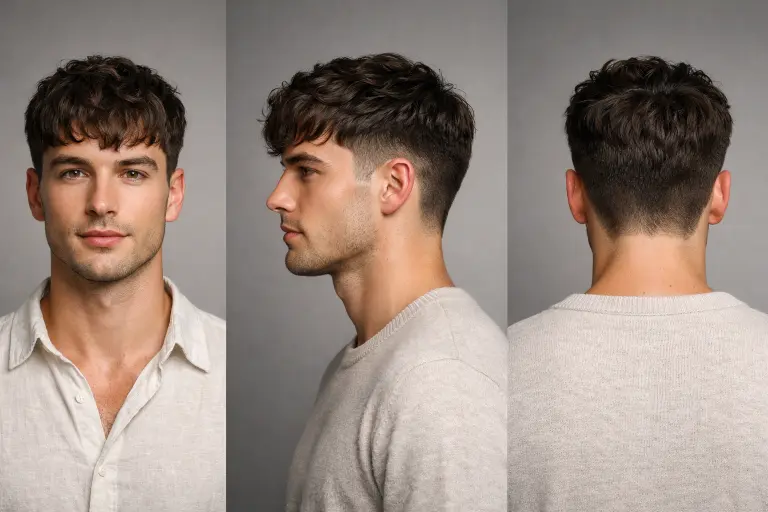
12. Low Taper Fade with Razor Textured Fringe
The fringe is cut using a razor instead of scissors, creating very fine, feathered ends. Great for adding movement to straight or slightly wavy hair. It suits angular face shapes and gives a softer, more fluid finish. Requires light styling—too much product can flatten the effect. Ideal if you want a more natural, airy look.
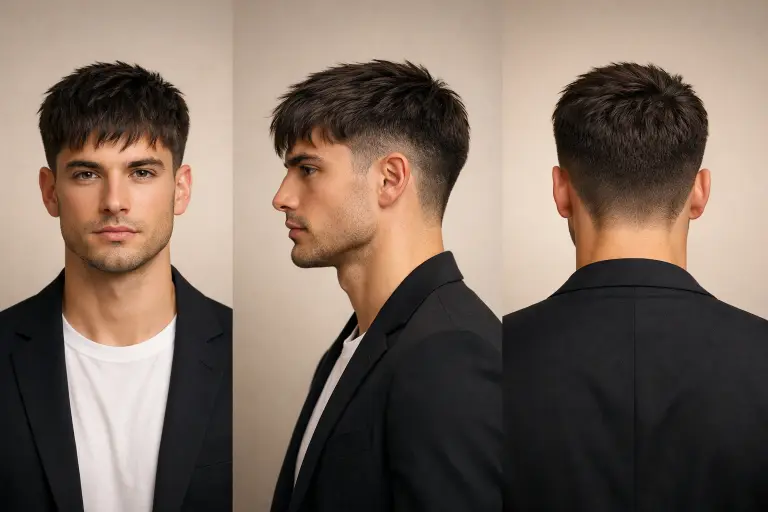
13. Low Taper Fade with Blunt Textured Fringe
This style combines a straight-across fringe with internal texture. From the front, it looks structured, but up close it has movement. Best for thick hair and suits longer or oval faces. It gives a strong, defined appearance while avoiding heaviness. Moderate maintenance—needs occasional styling to keep the shape clean.
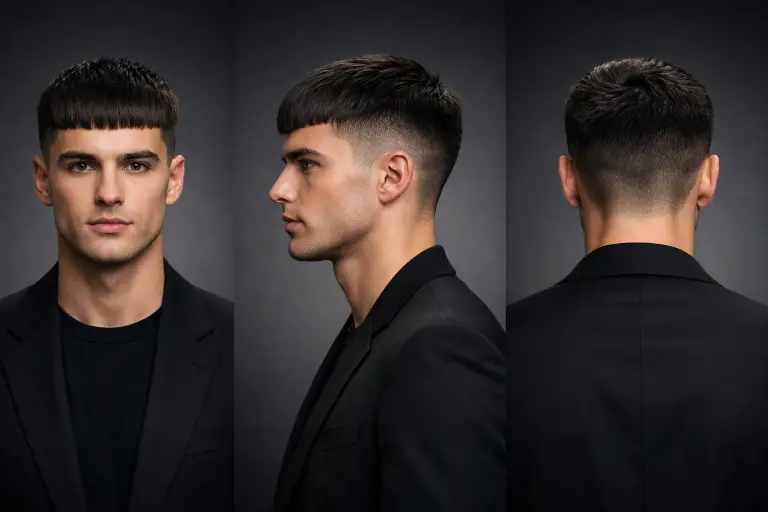
14. Low Taper Fade with Tousled Fringe
The fringe is styled in a slightly chaotic, lifted way rather than lying flat. Works well with medium-length hair and suits most face shapes. It gives a carefree, energetic vibe. Styling involves a bit of sea salt spray or light wax to create lift and separation.
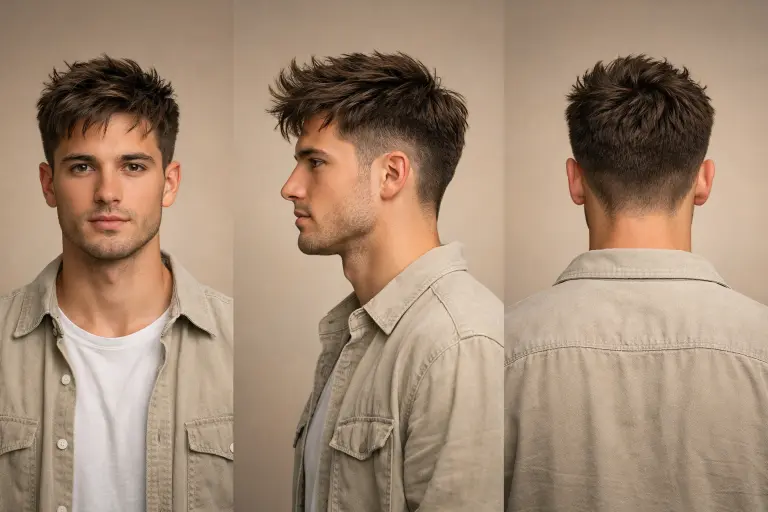
15. Low Taper Fade with Layered Fringe
This version focuses on multiple layers in the fringe, creating depth and natural flow rather than sharp texture. Best for medium to thick hair. It suits oval and round faces and gives a softer, more blended appearance. Easy to maintain and versatile—you can style it neat or slightly messy depending on the occasion.
How to Choose the Right Hairstyle
Start with your face shape. Round faces benefit from angled or side-swept fringes, while longer faces work well with fuller, forward fringes. Next, consider your hair type. Thick hair handles heavy texture and longer fringes, while fine hair needs lighter layering to avoid looking thin. Hair density matters too—if your hair is dense, you can go for choppier or disconnected styles. If it’s thinner, keep it subtle and blended. Finally, think about your lifestyle. If you don’t want daily styling, stick with softer, natural versions. If you enjoy styling, go for more defined, textured looks.
Common Mistakes to Avoid
Choosing a fringe that’s too heavy for fine hair. Going too short on top, which removes the “fringe” effect entirely. Ignoring face shape when deciding fringe length or direction. Overusing product, which kills natural texture. Not maintaining the taper—clean sides make the whole style work.
Pro Tips
Ask your barber for point cutting or razor work to get natural texture. Use matte products, not shiny gels, for a modern finish. Blow-dry your fringe forward for better shape and control. Trim every 3–4 weeks to keep the taper clean. Match your fringe length to your forehead height for better balance.
Conclusion
A low taper fade with textured fringe is one of the most adaptable men’s hairstyles right now—it works across different hair types, face shapes, and lifestyles. The key is choosing the right variation for you and understanding how much effort you’re willing to put into styling. Pick the version that fits your daily routine, not just what looks good in photos.
FAQs
1. Is a low taper fade with textured fringe good for all hair types? It works best for straight, wavy, or slightly curly hair. Very tight curls may need a modified version.
2. How often should I get this haircut? Every 3–4 weeks to keep the taper clean and the fringe in shape.
3. Do I need to style it every day? Not always. Softer or messy versions require minimal effort, while sharper styles need light daily styling.
4. What product is best for textured fringe? Matte paste, clay, or lightweight cream depending on your hair type.
5. Can this style work for a professional setting? Yes—just choose a shorter or more subtle textured fringe for a cleaner, office-friendly look.