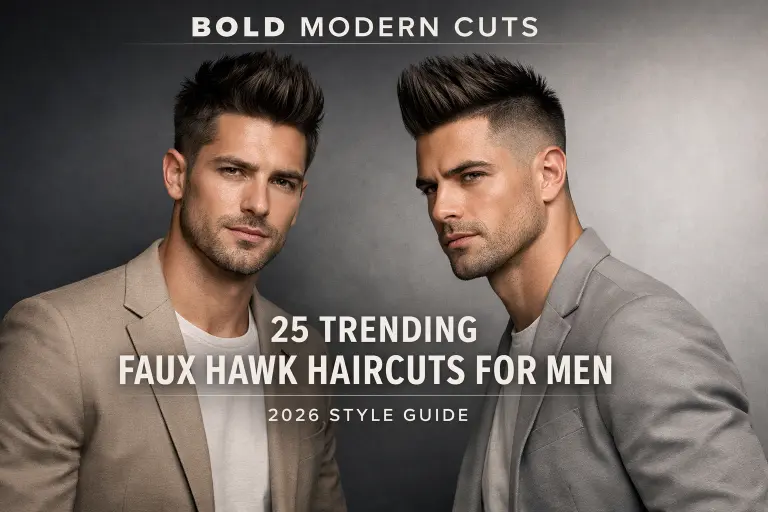
25 Trending Faux Hawk Haircuts for Men That Stand Out
Most guys want a haircut that looks bold—but not too extreme for daily life. That’s exactly where the faux hawk comes in. If you’ve ever liked the idea of a mohawk but didn’t want shaved sides or high maintenance styling, these faux hawk haircuts for men give you the perfect middle ground.
What Is a Faux Hawk Haircut?
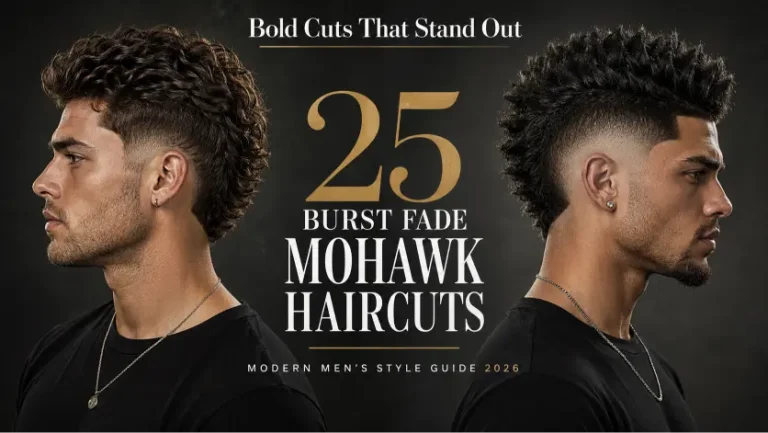
A faux hawk (or “fohawk”) is a men’s haircut with shorter sides and a longer strip of hair through the center, styled upward to mimic a mohawk—without shaving the sides completely. It offers a bold shape while staying versatile and wearable for both casual and professional settings.
1. Classic Faux Hawk
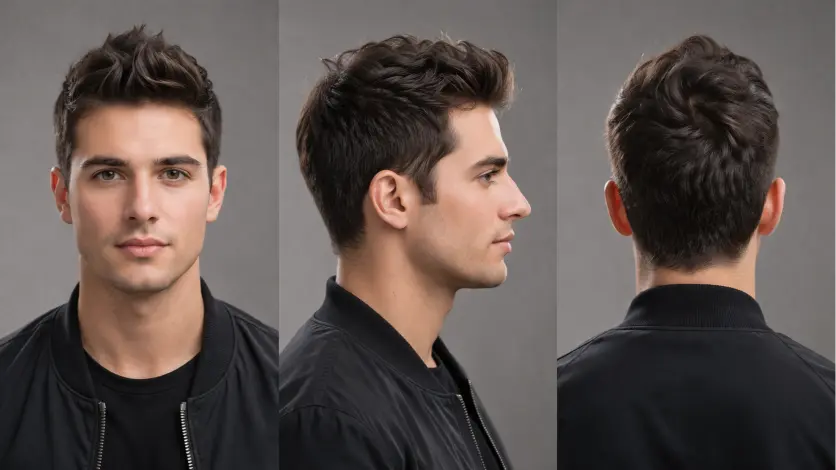
This is the foundation of all faux hawk styles. The sides are neatly tapered—not too short—while the top is left longer and styled into a subtle peak. It suits most face shapes, especially oval and square, and works best with straight to slightly wavy hair. The look is clean yet edgy, making it perfect if you want a safe entry into the style without going too bold. Maintenance is moderate—just a bit of styling product and a quick blow-dry.
2. Faux Hawk Fade
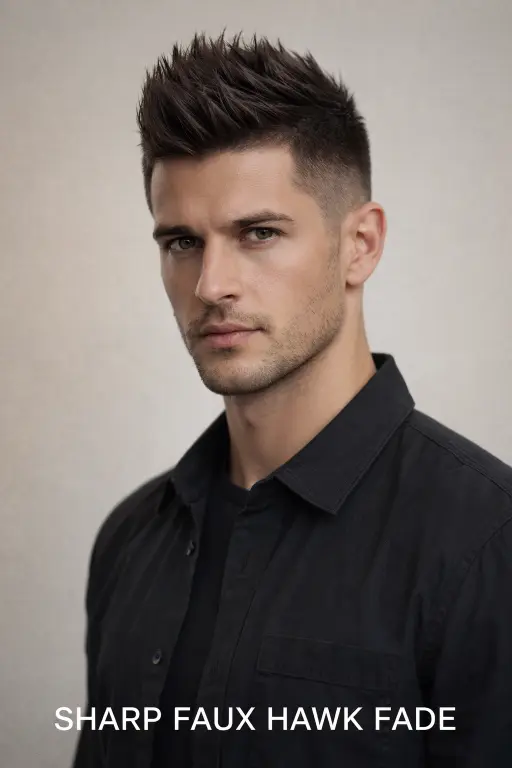
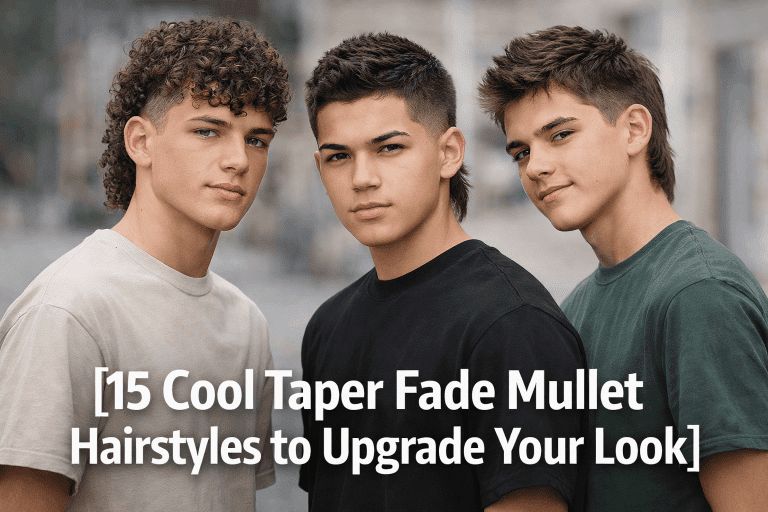
Here, the sides gradually fade down into the skin, creating a sharp contrast with the longer top. This cut adds structure and definition, making it ideal for men with thick hair. It works especially well on round faces because the height elongates your features. The fade keeps things clean, but you’ll need regular barber visits to maintain that crisp look.
3. Low Fade Faux Hawk
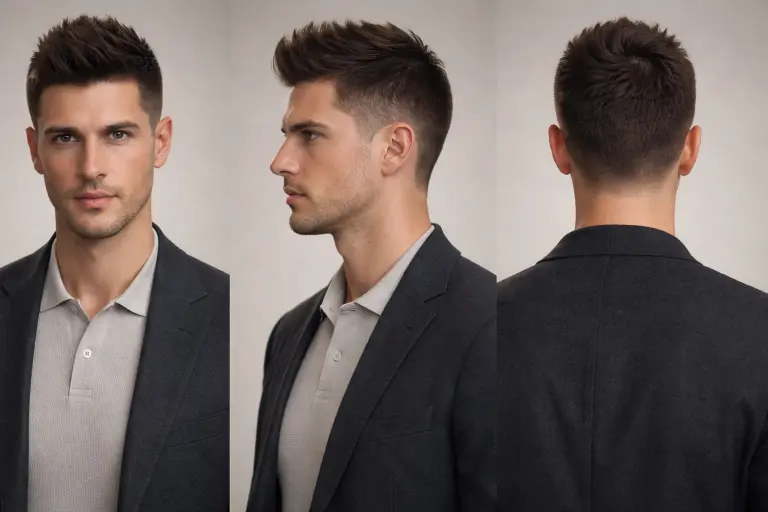
This version keeps the fade subtle and lower around the ears. The top still forms a soft ridge, but the overall look is less aggressive. It’s perfect for office environments or conservative settings. Best for straight or fine hair, and it suits oval or long face shapes. Styling effort is low—just light product and finger shaping.
4. High Fade Faux Hawk
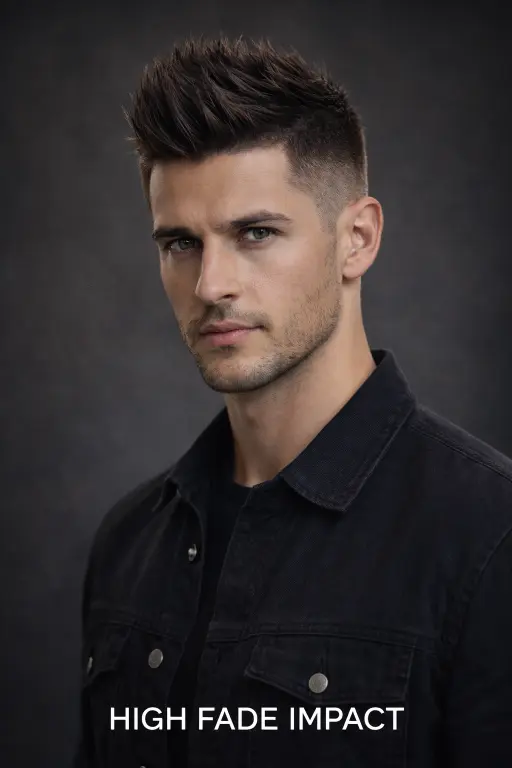
With a high fade, the sides are cut much shorter and higher up the head, making the center strip stand out more. This creates a bold, sharp silhouette. It’s ideal for thick hair and angular face shapes like square or diamond. The vibe is confident and modern, but it requires regular trims to keep the contrast sharp.
5. Short Faux Hawk
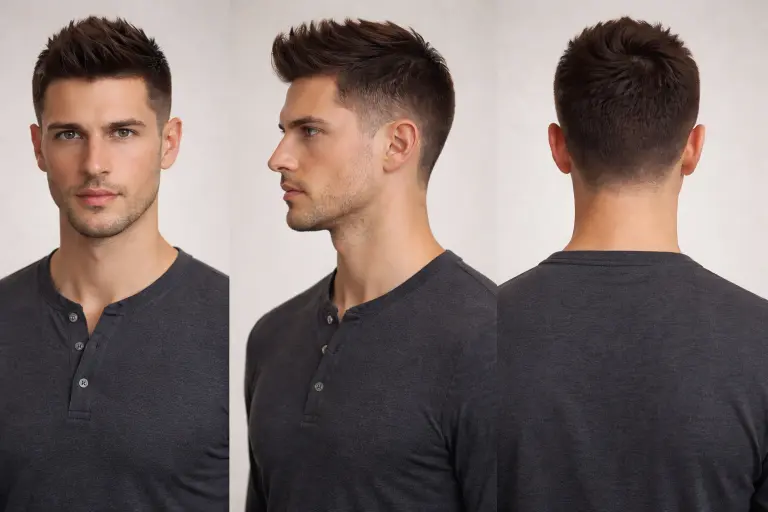
A shorter version keeps the top minimal, creating just a slight ridge. It’s clean, practical, and easy to manage—great for busy lifestyles. Works well on thin or fine hair because it doesn’t rely on heavy volume. It complements most face shapes and requires almost no daily styling.
6. Long Faux Hawk
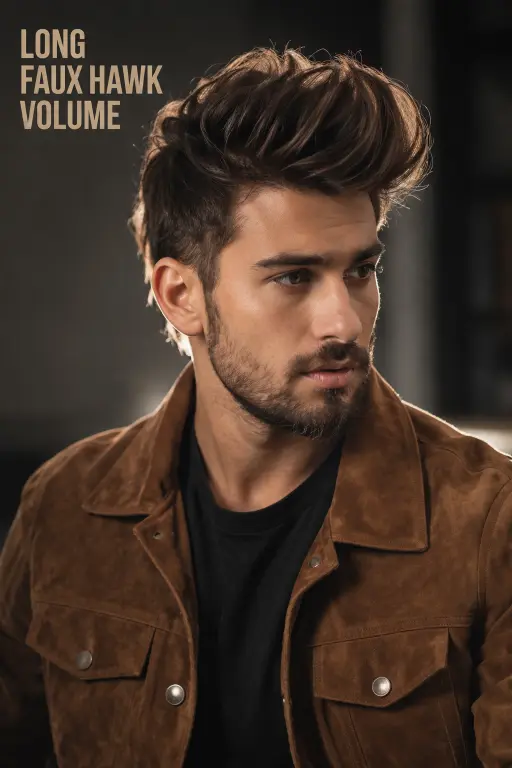
This style leaves significant length through the middle, allowing for dramatic height and movement. The sides are still short, but not extreme. It suits thick, straight, or wavy hair and works best on oval or rectangular faces. It gives a bold, fashion-forward vibe but requires styling time with blow-drying and strong hold products.
7. Textured Faux Hawk
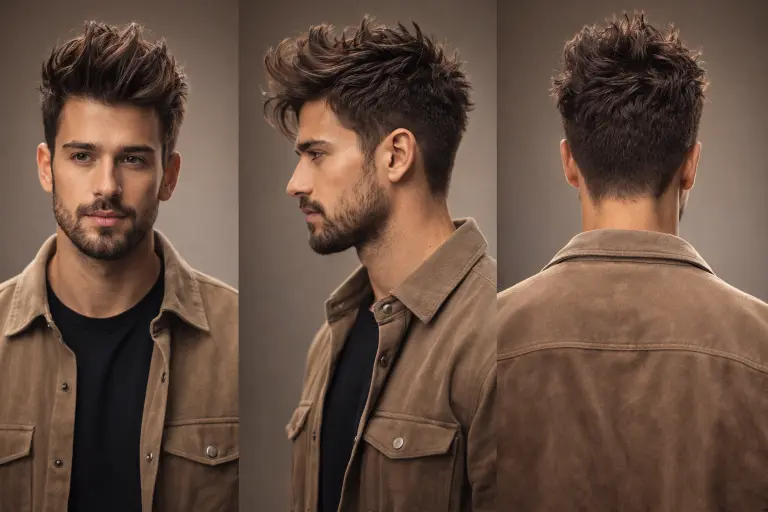
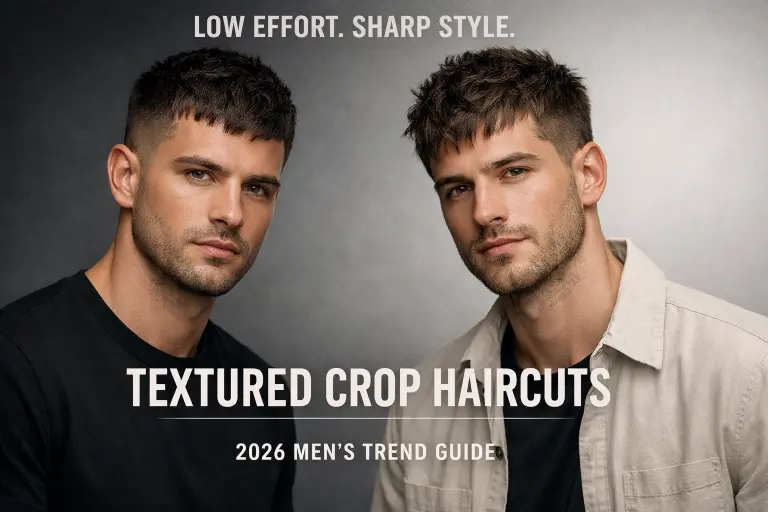
Instead of sharp spikes, this version focuses on messy, natural texture. The top is layered and styled loosely, giving movement rather than stiffness. It’s ideal for wavy or thick hair and suits almost all face shapes. The relaxed finish makes it feel effortless, and it’s easier to maintain than spiky versions.
8. Curly Faux Hawk
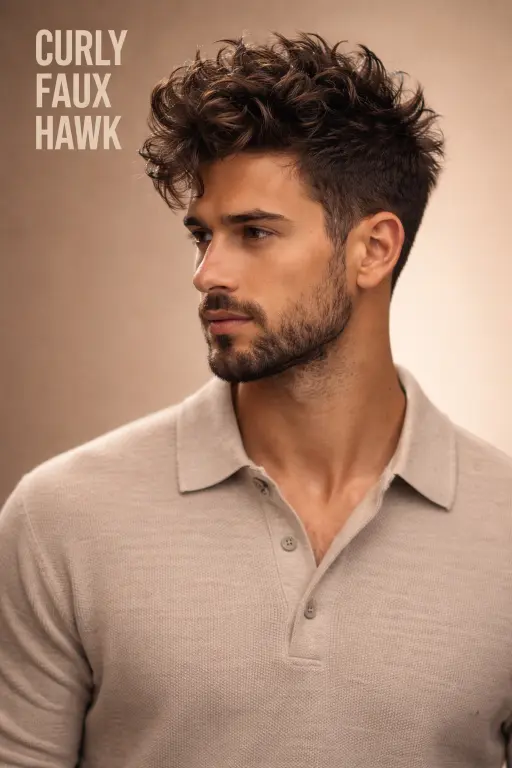
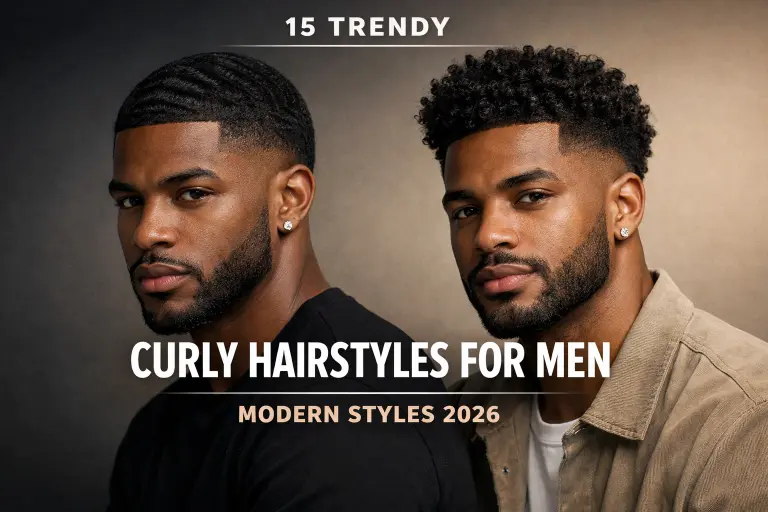
Designed for naturally curly hair, this style keeps the curls concentrated along the center while the sides are faded or tapered. It adds volume and personality without forcing your hair into unnatural shapes. Great for oval and square faces. Styling is simple—just curl cream or leave-in product.
9. Wavy Faux Hawk
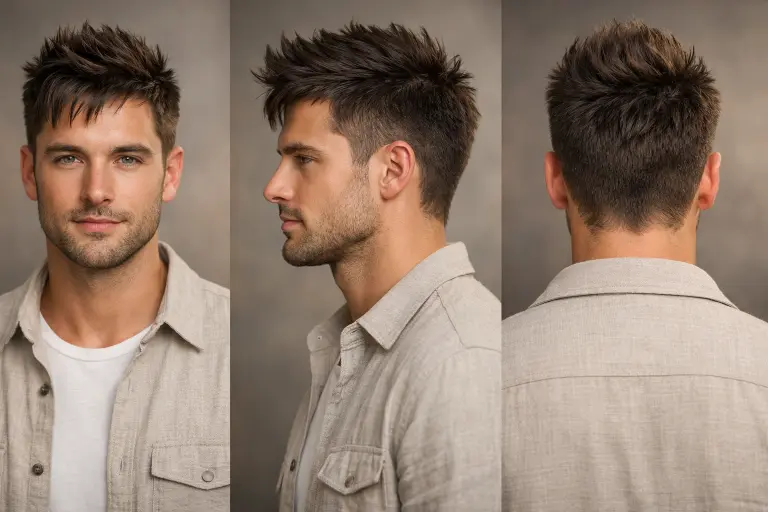
Similar to the curly version but softer, this style enhances natural waves instead of fighting them. The top flows backward slightly, creating a relaxed, beachy look. Best for medium-density hair and suits longer face shapes. Low maintenance and very wearable daily.
10. Spiky Faux Hawk
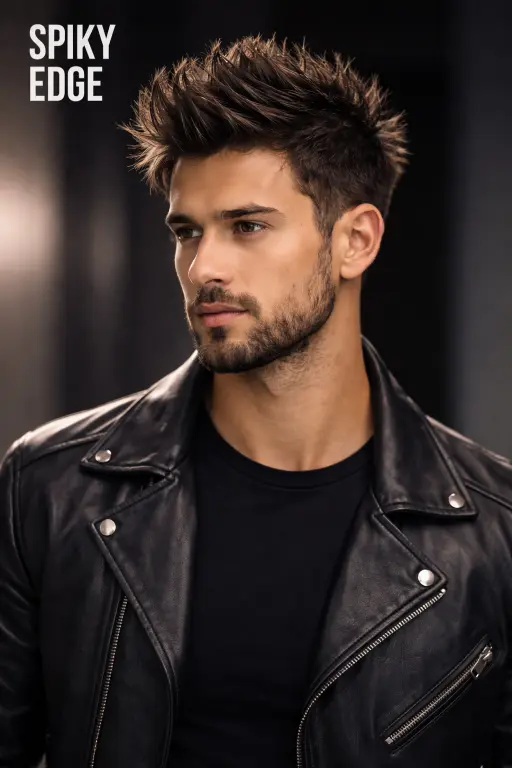
This is the closest you’ll get to a traditional mohawk without going extreme. The top is styled into defined spikes using strong hold products. It works best on thick, straight hair and suits square or oval faces. The look is bold and youthful but requires daily styling effort.
11. Faux Hawk Undercut

Here, the sides are disconnected from the top, creating a strong contrast. The undercut gives the faux hawk a sharper, more fashion-forward edge. Ideal for thick hair and angular face shapes. It’s high-impact but requires consistent styling to keep the top controlled.
12. Tapered Faux Hawk
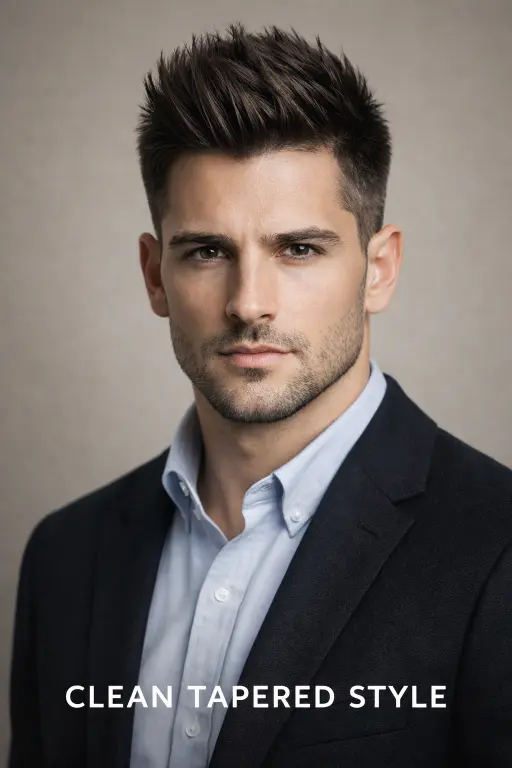
Instead of a fade, this version uses a gradual taper on the sides for a softer transition. It’s a more classic, conservative take on the faux hawk. Works well for professional environments and suits all hair types. Easy to maintain and doesn’t require frequent barber visits.
13. Messy Faux Hawk
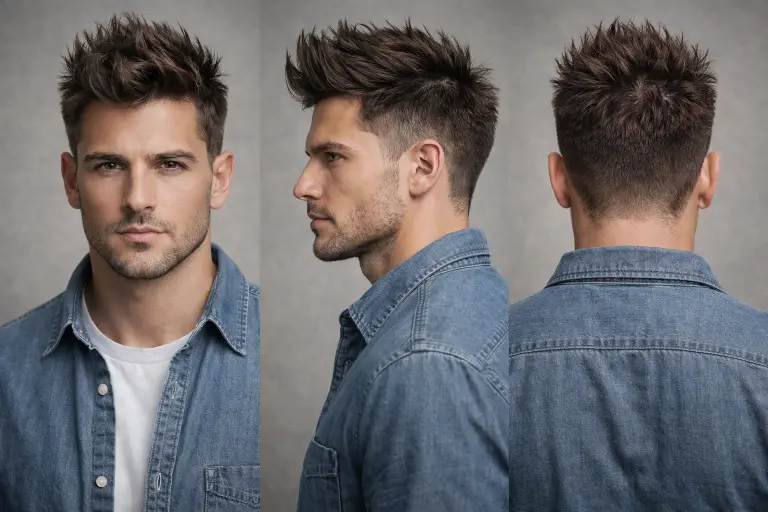
This style intentionally avoids structure. The top is tousled and styled loosely, giving a relaxed, slightly rugged appearance. It’s perfect for medium to thick hair and suits oval or heart-shaped faces. Low maintenance—just use a matte product and go.
14. Faux Hawk with Beard
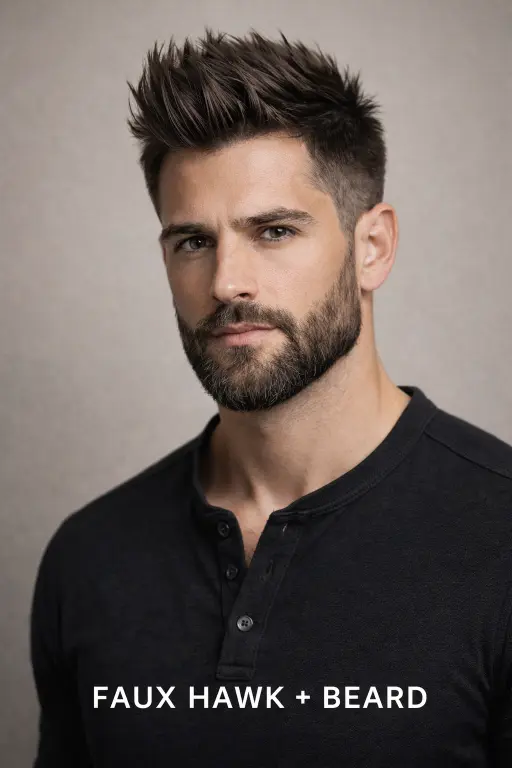
Pairing a faux hawk with a beard creates a balanced, masculine look. The hair adds height, while the beard adds weight to the lower face. Works especially well for round faces. Maintenance depends on both hair and beard grooming, but the overall style feels cohesive and bold.
15. Faux Hawk with Line Design
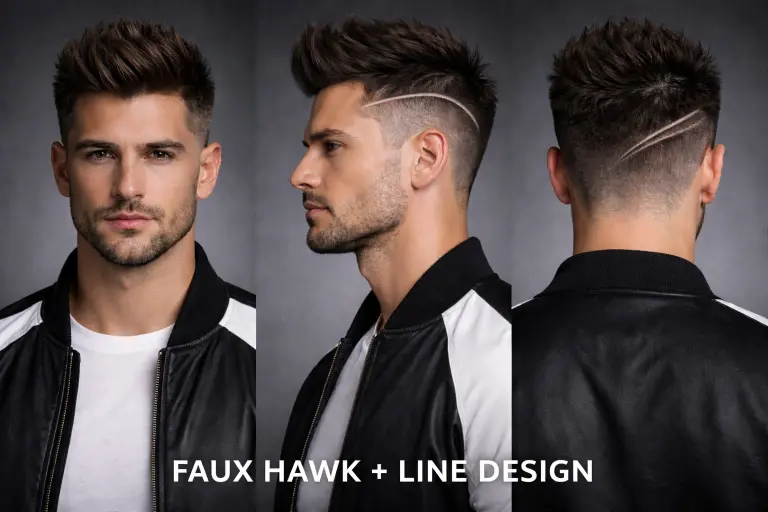
This version adds shaved lines or patterns into the fade on the sides. It’s highly expressive and works best with shorter fades. Ideal for younger guys or those wanting a standout look. Requires regular touch-ups to keep the design sharp.
16. Faux Hawk with Hard Part
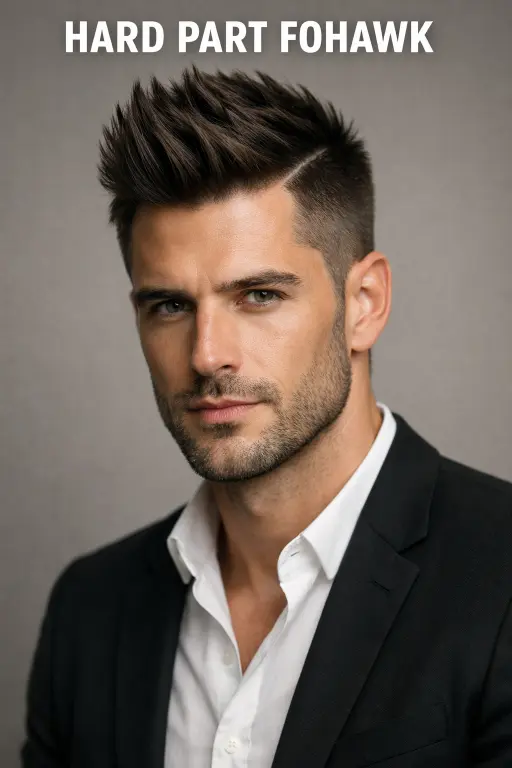
A defined shaved part line adds structure and contrast to the haircut. It gives a more polished, intentional look. Works well with straight or slightly wavy hair and suits square or oval faces. Maintenance is moderate, especially to keep the part visible.
17. Mini Faux Hawk
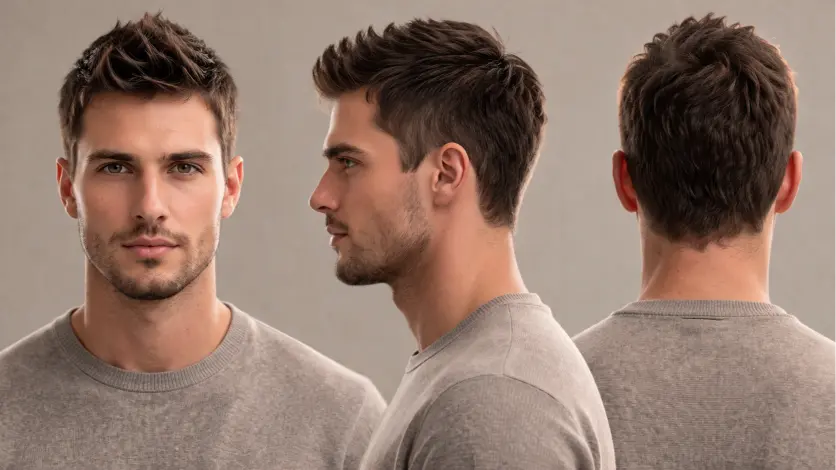
A subtle version with minimal height and softer shaping. It’s perfect if you want just a hint of edge without committing fully. Works for all hair types and face shapes. Very low maintenance and beginner-friendly.
18. Faux Hawk Pompadour

This combines the volume of a pompadour with the shape of a faux hawk. The front is lifted high and styled back. Best for thick, straight hair and suits longer face shapes. High styling effort, but the result is polished and striking.
19. Faux Hawk Quiff
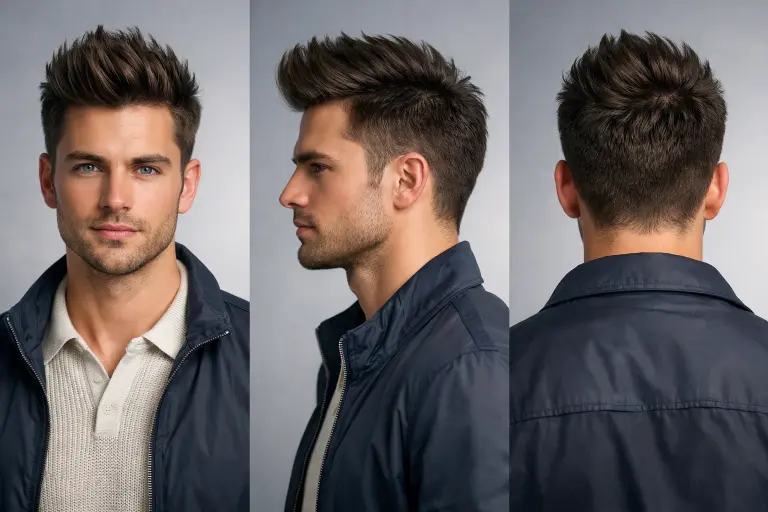
Similar to the pompadour but less structured, the quiff adds volume at the front while keeping the center ridge. It’s versatile and suits most face shapes. Works best with medium-length hair and requires moderate styling.
20. Faux Hawk for Thin Hair
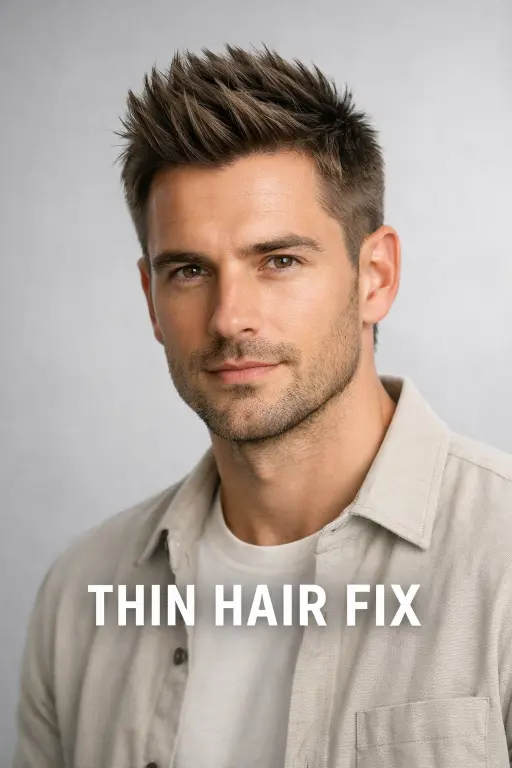
This version keeps the sides very short to make the center appear fuller. The top is styled softly to avoid exposing the scalp. Ideal for men with thinning hair, as it creates the illusion of density. Low to moderate maintenance.
21. Faux Hawk for Thick Hair
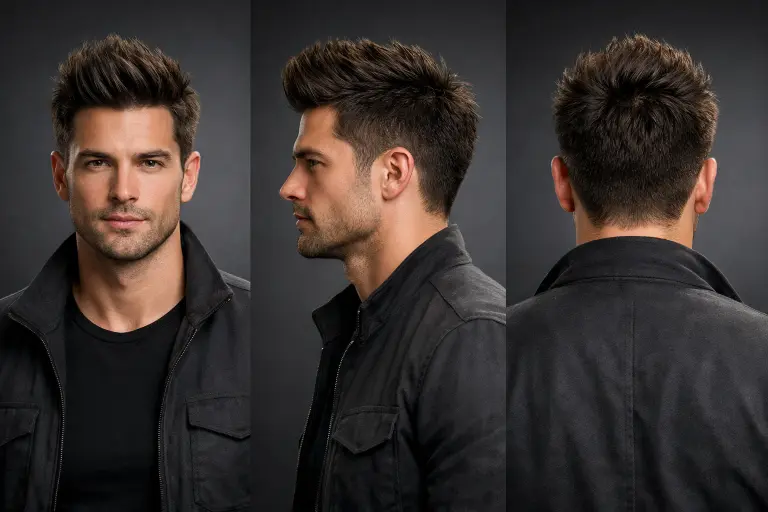
Thick hair allows for more dramatic height and texture. This style uses layering to control bulk while keeping volume on top. Works best for square or oval faces. Requires thinning and regular styling to avoid heaviness.
22. Faux Hawk with Highlights
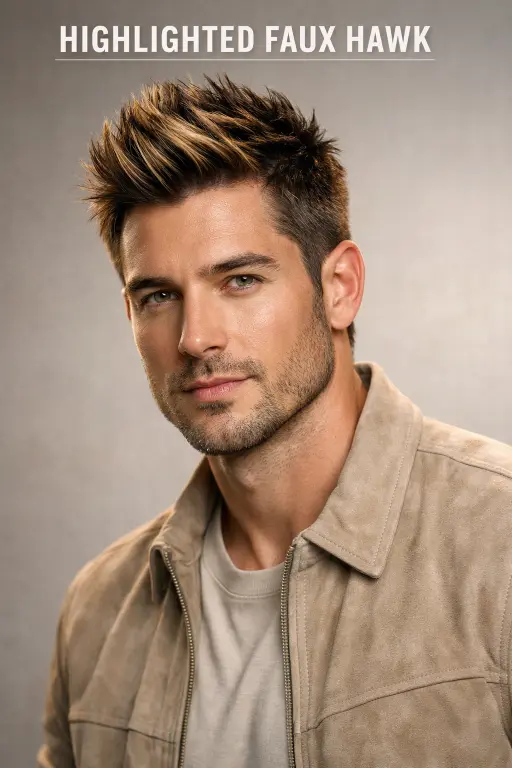
Adding color or highlights enhances the texture and makes the top stand out more. It’s especially effective with spiky or textured styles. Works for all hair types but requires upkeep for the color.
23. Faux Hawk with Fringe
This version keeps some length at the front, allowing it to fall slightly forward before blending into the ridge. It softens the look and suits longer or narrow face shapes. Great for wavy or straight hair.
24. Faux Hawk with Drop Fade
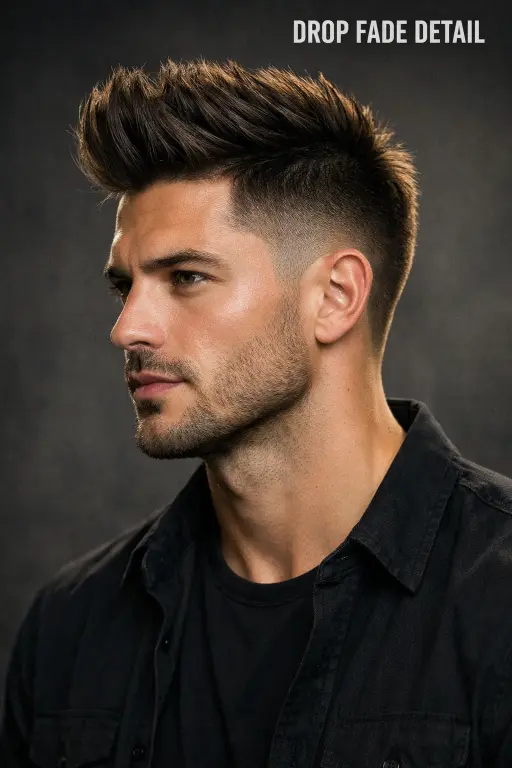
The fade curves down behind the ears, following the natural head shape. This adds dimension and a more custom look. Best for thick hair and suits round or square faces. Needs regular maintenance to keep the fade clean.
25. Subtle Faux Hawk
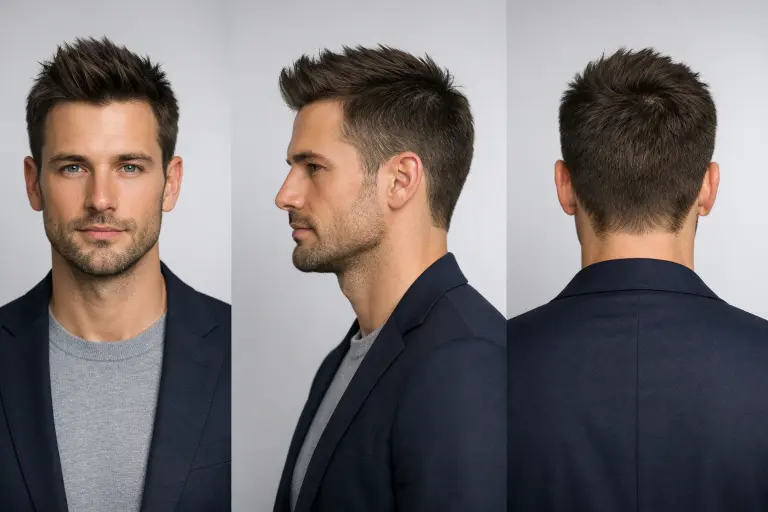
A toned-down version where the top is only slightly lifted. It blends easily into everyday styling and doesn’t scream for attention. Perfect for professionals or first-timers. Works for all hair types and requires minimal effort.
How to Choose the Right Faux Hawk Hairstyle
Choosing the right faux hawk comes down to a few key factors:
- Face shape: Round faces benefit from taller styles, while longer faces suit lower, softer versions.
- Hair type: Thick hair works well with volume-heavy styles, while thin hair needs shorter, structured cuts.
- Hair density: If your hair is sparse, avoid extreme height and focus on texture.
- Lifestyle: If you don’t want daily styling, go for shorter or messy versions instead of spiky or pompadour styles.
Common Mistakes to Avoid
- Choosing a style that requires more styling time than you can commit
- Going too high or extreme for your face shape
- Ignoring hair texture (forcing curls into straight styles rarely works)
- Not maintaining fades—this style relies heavily on clean sides
- Using too much product, which makes the hair stiff or greasy
Pro Tips
- Always ask your barber for texture on top—it makes styling easier
- Use a matte clay for natural hold instead of shiny gel
- Blow-dry your hair upward for better volume and shape
- Keep the sides clean every 2–3 weeks for a sharp look
- If unsure, start with a low fade or subtle faux hawk and adjust later
Conclusion
The faux hawk is one of the most versatile haircuts you can choose—it gives you edge without going overboard. Whether you want something clean and subtle or bold and high-volume, there’s a version that fits your face, hair, and lifestyle. Start simple, then build your style from there.
FAQs
1. Is a faux hawk suitable for professional settings?
Yes. Subtle or low fade versions work well in office environments while still adding personality.
2. How do I style a faux hawk daily?
Blow-dry your hair upward, then use a small amount of matte clay or paste to shape the center.
3. Does a faux hawk work for thin hair?
Yes. Keeping the sides short and adding light texture on top can make thin hair look fuller.
4. How often should I get a trim?
Every 2–3 weeks to maintain the fade and shape.
5. What’s the difference between a faux hawk and a mohawk?
A faux hawk keeps hair on the sides, while a mohawk usually has shaved sides for a more extreme look.